Cook From Your Fridge: 5 Plant Dinners That Cut Grocery Costs
Cook from your fridge with five pantry-first plant dinner formulas. Turn leftover vegetables, beans, and grains into filling meals and trim grocery costs.
I denne artikel
There’s half a cabbage in the crisper, a cup of cooked lentils in the fridge, and a container of quinoa you meant to take to work. None of it looks like dinner. Toss the cabbage with lemon and salt, warm the lentils and quinoa, and spoon mustard dressing over the lot. Now it’s a crunchy, tangy bowl with about 26 grams of protein, and nothing on the shopping list.
That’s pantry-first cooking: decide what to make after checking what you own, not before. A small set of staples gives you five ways to turn the same odds and ends into dinner: a bowl, skillet, curry, sheet-pan meal, or soup. The trick is to pick the ingredient that needs using first, then add enough protein and starch to make it a meal.
Why pantry-first plant cooking can cut grocery costs
An Oxford University-led study in The Lancet Planetary Health modeled food prices in 150 countries. It found that vegan diets could cost around 30% less than current diets in high-income countries, with reductions of up to roughly one third. That’s a comparison of modeled diets, not a guarantee that your next grocery receipt will be 30% smaller.
The budget lesson is to build around legumes, grains, and seasonal or frozen produce rather than treating plant-based shopping as a one-for-one swap for meat and dairy. A bag of lentils can supply protein for soup, a bowl, and a curry. A pack of meat substitutes can be convenient, but it isn’t the price benchmark for a plant-based dinner.
To see whether the approach works in your kitchen, compare four weeks of grocery spending with the previous four, and note any change in takeaway spending. Buying a bulk bag can make one week look expensive even when it saves money over a month. Also watch what you bin: a bargain bag of greens isn’t a bargain if you only eat half.
Stock a pantry that can rescue dinner
Start with two legumes you like, one grain you’ll actually cook, and two seasonings that make leftovers taste different the next night. Canned black beans, dry red lentils, rice, curry powder, and mustard are enough to get started. Add frozen edamame or peas if you have freezer space. Buy dried beans if the unit price makes sense and you’ll cook them. If a can keeps you from ordering dinner on a busy Tuesday, it’s doing its job.
Use these portions to estimate protein. The values are rounded, and the cup measures are for cooked foods, not dry ingredients. For canned products, check the label if you want a more specific estimate.
| Food, cooked | Portion | Protein |
|---|---|---|
| Lentils, boiled | 1 cup (198 g) | 17.9 g |
| Chickpeas, boiled | 1 cup (164 g) | 14.5 g |
| Black beans, boiled | 1 cup (172 g) | 15.2 g |
| Shelled edamame, frozen and prepared | 1 cup (155 g) | 18.5 g |
| Quinoa, cooked | 1 cup (185 g) | 8.1 g |
Source: USDA FoodData Central, standard food entries. A spoonful of beans can finish a dish, but it won’t supply the protein of a full serving. Measure a cup once or twice so you know what that portion looks like in your own bowl.
Five pantry dinner formulas, not five shopping lists
1. Bowl: grain + legume + crunchy veg + dressing
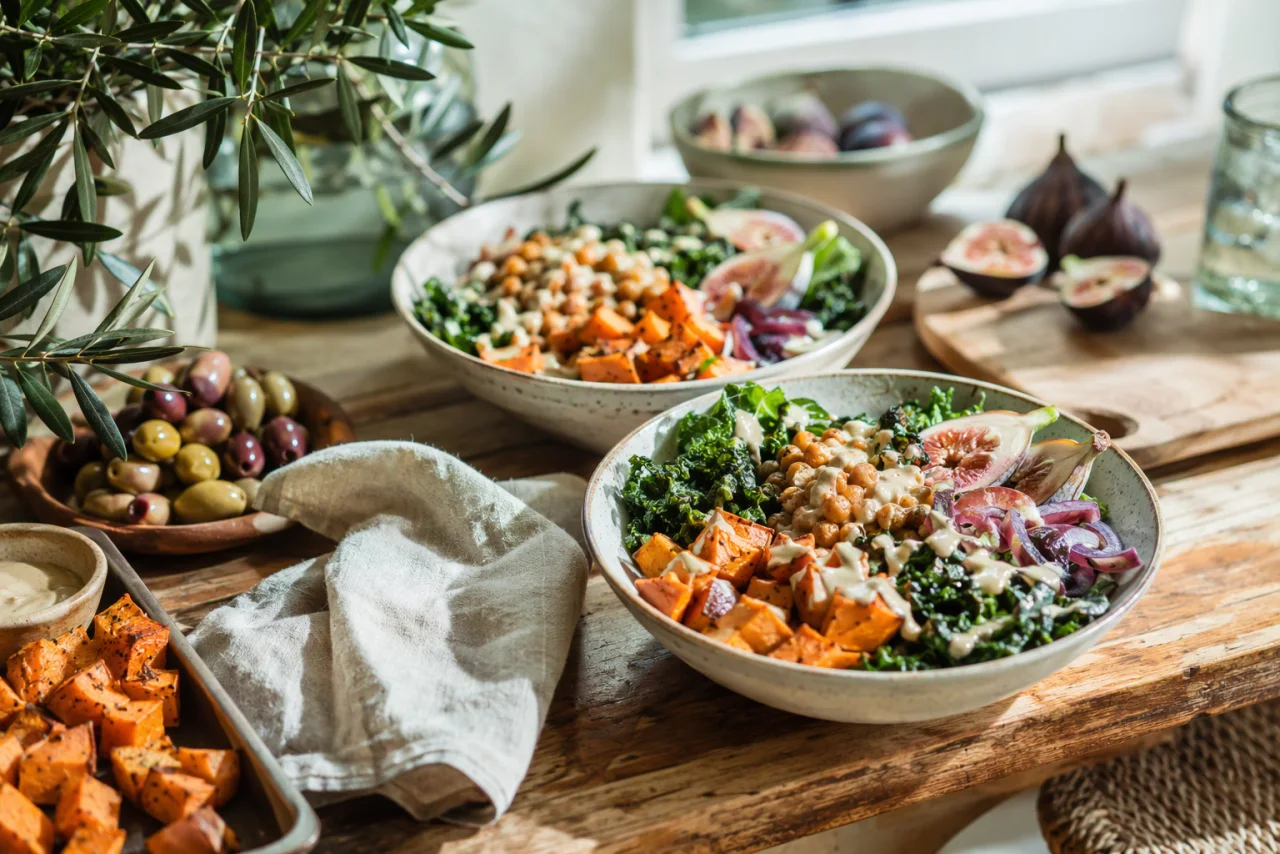
Use a cooked grain and a cooked legume, then add something crisp and a sharp dressing. A cup each of quinoa and lentils gives you about 26 grams of protein. Add shredded cabbage or grated carrot, then dress with lemon, mustard, and a splash of water. If the grain and lentils are ready, the bowl takes about 10 minutes. Keep the vegetables undressed if you’re packing a second portion for lunch.
2. Skillet: quick-cooking veg + beans + seasoning + starch
Slice leftover peppers and onions thinly, sauté until they soften, then add drained black beans and smoked paprika. Fold in prepared edamame and heat through. A cup of black beans and half a cup of edamame give you about 24 grams of protein before the starch. Serve in tortillas, over a reheated potato, or with toast. If the pan is crowded, cook the vegetables first so they brown instead of steaming.
3. Curry: aromatics + spices + liquid + legumes
Soften onion or garlic, stir in curry powder briefly, then add canned tomatoes or a splash of coconut milk and enough water to loosen the sauce. Simmer with chickpeas and diced leftover vegetables until tender. Stir in prepared edamame toward the end. A cup of chickpeas and half a cup of edamame supply about 24 grams of protein. Frozen spinach can go straight into the simmering sauce when you’re out of fresh greens.
4. Sheet-pan dinner: roastable veg + chickpeas + a protein-rich side
Cut carrots, cauliflower, or potatoes into similar-size pieces. Toss with oil and spices, then roast at 425°F (220°C) until browned and tender, about 25 to 35 minutes depending on the cut. Add drained, patted-dry chickpeas for the last 15 minutes. Serve with prepared edamame dressed in lemon and garlic. Three-quarters of a cup each of chickpeas and edamame provides about 25 grams of protein. This isn’t the fastest dinner, but most of the time is hands-off.
5. Soup: broth + chopped veg + cooked pulses + acid
Simmer chopped carrot, celery, or cabbage in stock until tender. Add cooked lentils and black beans, heat through, then finish with vinegar or lemon. A cup of lentils and half a cup of black beans provide about 25 grams of protein. Mash a ladleful against the side of the pot if you want a thicker broth. Freeze extra servings in individual portions so your next soup night doesn’t require thawing the whole batch.
Get from fridge inventory to dinner with Veganistik
In Veganistik’s Cook From Your Fridge, enter the ingredients you need to use first, then the staples you have on hand. Try “half a cabbage, cooked lentils, cooked quinoa, lemon, mustard.” That’s enough to get meal ideas in minutes without asking you to buy a sauce or a garnish you’ll only use once. If a suggestion treats lentils as a topping, use the table above to size the portion. The app can suggest a dinner quickly; a tray of raw potatoes still needs time in the oven.
If you’re not in the mood for another bowl, browse Veganistik’s 260+ everyday recipes or try the 1-tap Craving Swap to find a plant-based option that fits what you’re craving. Not sure about the stock cube or curry paste already in the cupboard? The barcode and OCR label scanner can help check packaged ingredients, with support for 30 languages and a reference covering 200+ E-codes. The daily Protein/Hydration/B12 Calculator helps you look beyond one dinner. For B12, plan on a reliable fortified food or supplement rather than counting on beans and grains.
Veganistik’s Earth & Animal Impact Dashboard, informed by Poore and Nemecek’s research and featuring 110 botanical milestones, puts plant food choices in environmental context. For a more social way to try these formulas, use Vegan Connect and its real-life Vegan Dining Tables to find people to share a meal with. When dinner is out instead, the 30-language Waiter Card, AI Menu Reader, and Global Vegan Map help you look for plant-based options away from your own kitchen.
A five-minute checklist before you shop
- Pick one ingredient to use first. Move the half cabbage, open tin, or cooked lentils to the front of the fridge.
- Choose the protein and the format. Check that you have a meal-size portion of legumes, then decide whether a bowl, skillet, curry, tray, or soup suits what’s left.
- Shop for gaps, not full recipes. If you have plenty of beans, grains, and veg, you may only need lemons. Check the freezer before buying another bag of anything.
- Label and chill leftovers promptly. Refrigerate perishable food within two hours, or within one hour above 90°F (32°C). Most cooked leftovers keep three to four days in a fridge at 40°F (4°C) or below. Freeze portions you won’t eat in time.
- Notice what goes uneaten. If the second bunch of greens goes slimy every week, buy one bunch and keep frozen greens as backup. That’s a better saving than finding a cheaper two-pack.
References
- Springmann M, et al. The global and regional costs of healthy and sustainable dietary patterns: a modelling study. The Lancet Planetary Health. 2021;5:e797-e807. DOI.
- Poore J, Nemecek T. Reducing food’s environmental impacts through producers and consumers. Science. 2018;360:987-992. DOI.
- USDA Agricultural Research Service. FoodData Central. Nutrient data for cooked legumes, edamame, and quinoa.
- USDA Food Safety and Inspection Service. Leftovers and Food Safety.
Ofte stillede spørgsmål
Can a plant-based diet lower my grocery bill by 30%?
An Oxford-led modeling study found that vegan diets could cut food costs by around 30%, and up to roughly one third, in high-income countries. Your savings depend on local prices, what you currently buy, and whether you use what you purchase.
What are the five pantry dinner formulas?
The five formulas are a bowl, skillet, curry, sheet-pan dinner, and soup. Start with a protein-rich staple, add produce you need to use, then choose a grain, sauce, or broth to suit the formula.
How can I make a high-protein vegan dinner from leftovers?
Combine 1 cup of cooked lentils with 1 cup of cooked quinoa for about 26 grams of protein, before adding vegetables or dressing. If both are already cooked, you can assemble the bowl in about 10 minutes.
How does Veganistik's Cook From Your Fridge work?
Enter the ingredients you have, starting with anything that needs using soon. Cook From Your Fridge suggests meals you can make with those ingredients. Include a protein staple such as lentils, black beans, or edamame to guide the suggestions.
Brug guiden i praksis allerede i dag
Scan ingredienser på 1 sekund, find et alternativ til det, du har lyst til, beregn dine mål for protein og B12, og mød veganere i nærheden til fællesspisning.
Læs videre
The 30-Day Plant-Based Blueprint for a Low-Stress Transition

Veganistik vs HappyCow, Abillion and Fig: A Whole-Day Test