The 30-Day Plant-Based Blueprint for a Low-Stress Transition
Go plant-based in 30 days without rebuilding your life around food. Set pantry anchors, handle cravings, eat out with confidence, and build a B12 routine.
Tässä artikkelissa
- Week 1, Days 1 to 7: Anchor Breakfast and Stock the Pantry
- Week 2, Days 8 to 14: Scan the Labels You Buy and Swap the Cravings You Feel
- Week 3, Days 15 to 21: Practice Eating Out Before the High-Stakes Dinner
- Week 4, Days 22 to 28: Set Your Protein, Hydration, and B12 Rhythm
- Days 29 and 30: Review What Worked and Track Impact Without Chasing a Score
- References
It’s 7:15 p.m. You have rice in the fridge, half a bag of spinach, and no idea whether the sauce in the cupboard contains fish. You’re hungry, someone else needs feeding, and the takeaway app already knows your order. Yesterday’s enthusiasm hasn’t disappeared. Dinner just asks too many questions.
That’s daily decision friction: every ingredient check, unfamiliar recipe, or awkward restaurant conversation adds another decision to a day that was already full. It’s easy to call that a willpower problem. But a better fix is to make fewer decisions at mealtime. Habit research suggests that repeating a behavior in a stable context helps it become more automatic, and that missing one opportunity doesn’t derail the process.
Veganistik’s 30-day journey gives those repetitions a sequence. Start with breakfast and two backup dinners, then tackle labels and cravings, practice eating out, and settle into a protein and vitamin B12 routine. If you’re going fully vegan, arrange a reliable B12 source from day one. Week 4 is for making that routine stick, not for starting it.
Week 1, Days 1 to 7: Anchor Breakfast and Stock the Pantry
Change the meal with the fewest moving parts. If you eat toast every morning, try peanut butter and banana. If you like oats, keep the oats and use fortified soy milk if you want a milk with more protein than many oat or almond drinks. Prefer savory? Make hummus toast with tomatoes, or warm leftover beans in a tortilla. Pick one breakfast you’d happily eat three times, not seven recipes you have to shop for.
For dinner, build around food you already buy. Keep a protein, a starch, a vegetable, and a flavor shortcut on hand. Canned white beans, pasta, frozen spinach, and tomato sauce make one meal. Canned black beans, microwave rice, frozen peppers, and salsa make another. You can cook both without chopping an onion, which is exactly why they belong in your plan.
Your first-week checklist
- Choose one repeatable breakfast and buy enough for three servings.
- Stock two fast dinners, including one you can make entirely from the pantry or freezer.
- Put a backup lunch or snack where you’ll actually need it: your desk, bag, or freezer.
- If you’re going fully vegan, choose a B12 supplement or check the B12 amounts in fortified foods you’ll reliably eat.
- Notice which meal was hardest to manage. Fix that one before adding more recipes.
When you have ingredients but no meal in mind, Veganistik’s Cook From Your Fridge can help you decide what to make. Its 260+ everyday recipes are useful when you want variety, but pick one recipe to repeat before bookmarking ten more.
Week 2, Days 8 to 14: Scan the Labels You Buy and Swap the Cravings You Feel
Start with the products you buy on repeat: bread, snacks, sauces, and ready meals. Checking your usual loaf once saves more effort than scanning an entire aisle. Look for a clear vegan label, then read the ingredient list if needed. Ingredients such as whey, casein, gelatin, and fish sauce are useful to recognize. An allergen statement is not a complete vegan check: it won’t necessarily flag every animal-derived ingredient. If you have a food allergy, follow the package’s allergen information and your clinician’s guidance rather than relying on a vegan label or an app result.
Veganistik’s barcode and OCR label scanner lets you scan a barcode or read printed ingredients with your camera. The app is available in 30 languages and covers 200+ E-codes. Use the scanner to shorten a shopping trip, not to settle ambiguous sourcing. If an additive can come from plant or animal sources and the label doesn’t say which, choose a clearly labeled alternative or ask the manufacturer.
Match the craving, not just the food
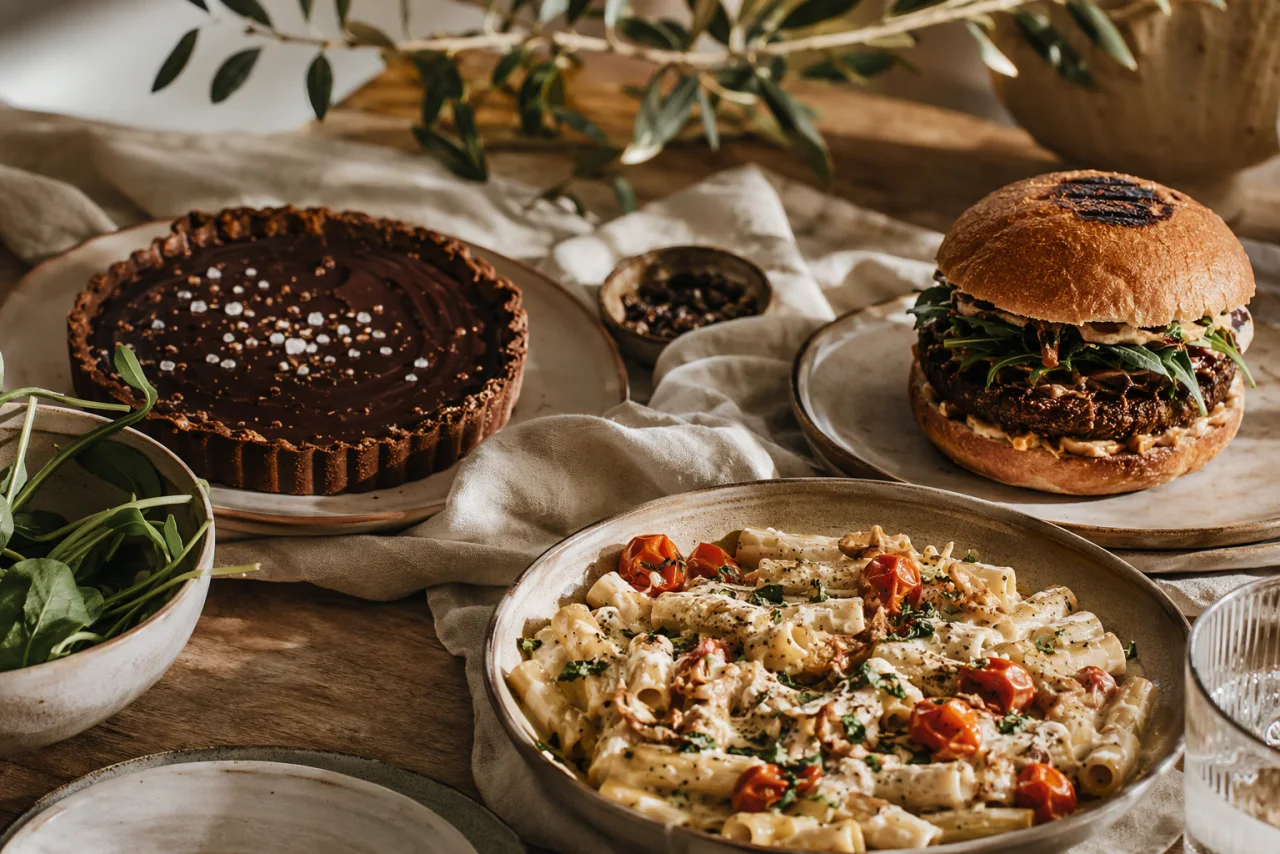
If you want something salty and crisp, a bowl of plain chickpeas is unlikely to hit the spot. Try tortilla chips with salsa and bean dip. If you miss a creamy pasta, try blending white beans into the sauce or use unsweetened soy cream. If the appeal of a burger is that it’s hot, filling, and ready in ten minutes, a plant-based patty on a bun may be a more useful swap than a recipe you won’t cook. The 1-tap Craving Swap is handy when you can name what you want but can’t think of an alternative.
Before looking for a swap, ask whether you’ve eaten enough. A leaf salad in place of a substantial lunch can leave you genuinely hungry by midafternoon. Add a starch, a protein source, and something satisfying such as tahini or olive oil. Then decide if you still want the snack.
Week 3, Days 15 to 21: Practice Eating Out Before the High-Stakes Dinner
Try one low-pressure outing first: lunch with a friend, a familiar café, or a takeaway order you can look up at home. Choose a likely main and one backup. Ask a specific question when it matters: “Is the vegetable broth made without chicken or fish?” will usually get a clearer answer than “Is this plant-based?” A vegetable dish can still contain butter, fish sauce, or meat stock.
Use the Global Vegan Map to shortlist venues, then check current menus and opening hours. Veganistik’s AI Menu Reader can help spot likely options, while the 30-language Waiter Card can communicate what you don’t eat when you and the server don’t share a language. Neither can confirm what went into the stockpot. Ask staff about any ingredient that would change your order.
For meals at someone’s home, make the request early and easy to answer: “I’m eating vegan this month. Would it help if I brought a chickpea salad everyone can share?” If you don’t want to discuss your reasons over dinner, “I’m figuring out what works for me” is enough. If you’d rather practice with people who already get it, use Vegan Connect to meet others or look for real-life Vegan Dining Tables. A meal where you don’t have to explain the menu can be a welcome break.
Week 4, Days 22 to 28: Set Your Protein, Hydration, and B12 Rhythm
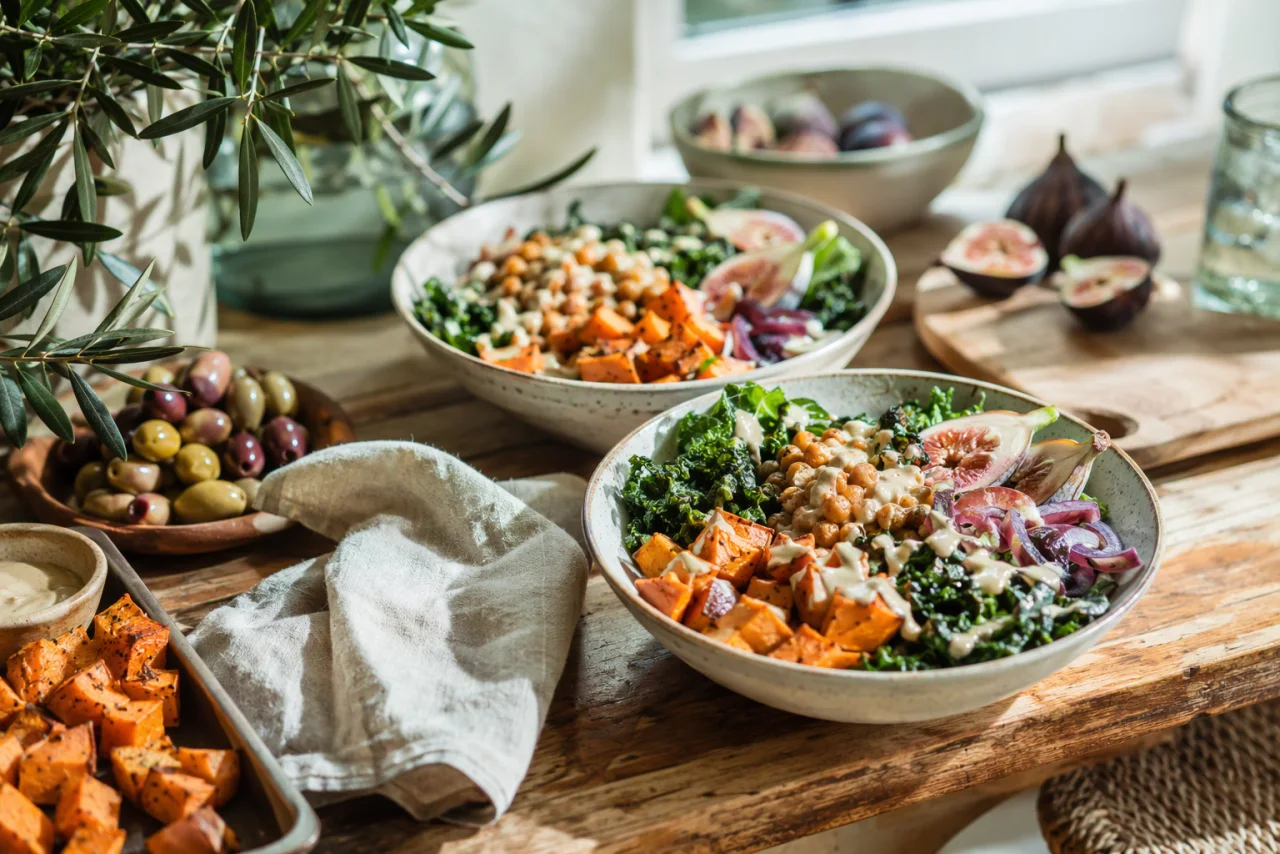
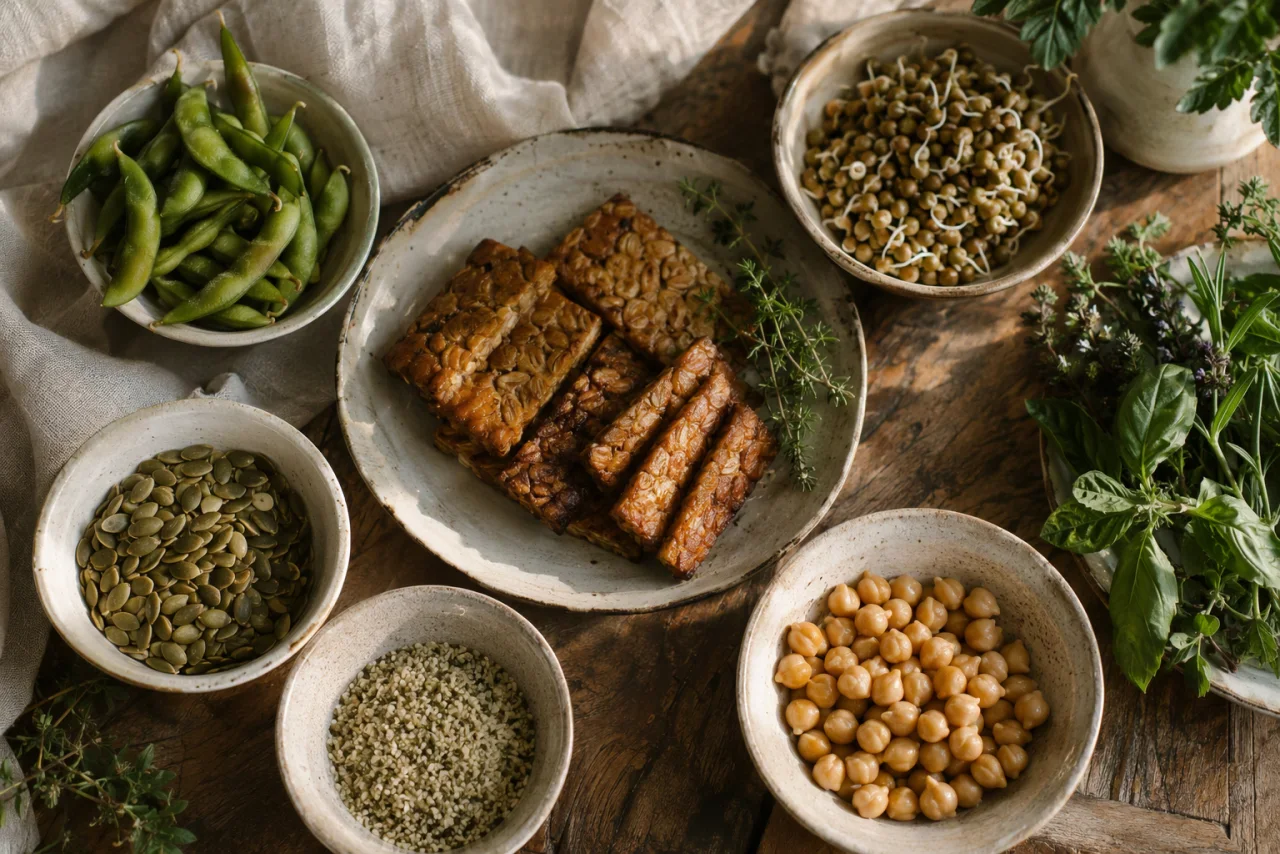
Put a recognizable protein source in meals you already eat. Add edamame to a rice bowl, use lentils in a tomato sauce, or stir chickpeas into a tray of roasted vegetables. The European Food Safety Authority’s population reference intake for healthy adults is 0.83 grams of protein per kilogram of body weight per day, about 58 grams for a 70 kg adult. It’s a reference, not an individual prescription. Needs can differ with age, pregnancy, activity, and health status.
| Cooked food | Portion | Protein |
|---|---|---|
| Lentils, boiled | 1 cup (198 g) | 17.9 g |
| Chickpeas, boiled | 1 cup (164 g) | 14.5 g |
| Edamame, frozen, prepared | 1 cup (155 g) | 18.5 g |
| Quinoa, cooked | 1 cup (185 g) | 8.1 g |
Source: USDA FoodData Central. Cup weights and protein values refer to the cooked or prepared foods listed.
The portions make the comparison useful. Quinoa contributes protein, but if it’s the base of your bowl, adding edamame or chickpeas makes a bigger difference than swapping quinoa for another grain. Use Veganistik’s daily Protein/Hydration/B12 Calculator for a few typical days to see what your usual meals cover. You don’t need to log indefinitely. For hydration, start with a cue you already have, such as filling your water bottle when you make breakfast.
For B12, the U.S. recommended intake for most adults is 2.4 micrograms per day. That is a dietary reference intake, not a supplement dose. Supplements use different amounts and schedules. If you rely on fortified foods, check the amount per serving and how often you actually have them. Unfortified nutritional yeast and fermented foods aren’t reliable sources. Put your supplement next to something you use at the time you plan to take it, or set a reminder that matches its schedule. If you have a history of B12 deficiency or absorption problems, ask a clinician for an individual plan.
Days 29 and 30: Review What Worked and Track Impact Without Chasing a Score
Ask three questions: Which meal now takes almost no thought? Which situation still catches me hungry or unprepared? What single change would make next week easier? Keep the sauce you genuinely like, the café order you can rely on, and the breakfast you look forward to. Drop the recipe you cooked once and quietly dreaded eating again.
If seeing the bigger picture motivates you, the Poore & Nemecek Earth & Animal Impact Dashboard offers 110 botanical milestones to explore. Treat them as markers beyond the 30-day journey, not a quota for the first month. Poore and Nemecek’s research found substantial variation in environmental impacts across producers, so modeled environmental figures are estimates, not measurements of your individual plate. Use the dashboard for perspective, not as a scorecard for dinner.
The best test of the blueprint is an ordinary busy night. If you can open the fridge, make something filling, and get on with your evening, you’ve made the next plant-based meal easier too.
References
- Lally P et al. How are habits formed: Modelling habit formation in the real world. European Journal of Social Psychology. 2010;40:998–1009. doi:10.1002/ejsp.674
- EFSA Panel on Dietetic Products, Nutrition and Allergies. Scientific Opinion on Dietary Reference Values for protein. EFSA Journal. 2012;10(2):2557. doi:10.2903/j.efsa.2012.2557
- USDA Agricultural Research Service. FoodData Central. Food composition data for cooked lentils, chickpeas, quinoa, and prepared edamame.
- NIH Office of Dietary Supplements. Vitamin B12: Fact Sheet for Health Professionals.
- Poore J, Nemecek T. Reducing food’s environmental impacts through producers and consumers. Science. 2018;360:987–992. doi:10.1126/science.aaq0216
Usein kysytyt kysymykset
What should I change first when going plant-based?
Start with one breakfast you already like and stock ingredients for two fast dinners. Arrange a reliable vitamin B12 source from the start if you are going fully vegan.
How can I manage cravings during a plant-based transition?
Match what you miss, whether that is crunch, salt, creaminess, or convenience. If you are hungry, choose a full meal with protein, carbohydrates, and fat rather than a light substitute.
Do I need a vitamin B12 supplement on a vegan diet?
You need a reliable B12 source. A supplement is often the simplest option, but fortified foods can also work if you consistently get enough. Do not rely on unfortified nutritional yeast or fermented foods.
What if I eat something non-vegan during the 30 days?
Keep going at your next meal. Notice whether hunger, convenience, or social pressure drove the choice, then make one practical change for next time.
Ota opas käyttöön jo tänään
Skannaa tuotteiden ainesosaluettelot sekunnissa, muunna mieliteot kasvisversioiksi, laske proteiini- ja B12-tavoitteesi sekä tutustu lähialueesi vegaaneihin yhteisillä illallisilla.
Lue seuraavaksi

Veganistik vs HappyCow, Abillion and Fig: A Whole-Day Test
Plant-Based Protein, Amino Acids and B12: Your Daily Targets